

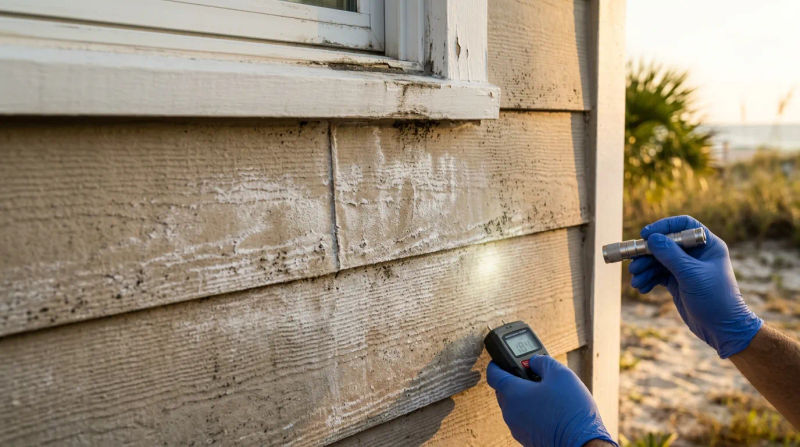
Living here on the Gulf Coast, we get used to the constant gentle breeze coming off the water. It’s one of the best parts of calling this place home. But have you ever noticed, especially as we move into the drier air of fall, that your home’s siding just looks… tired? It’s not overtly dirty, but it has a dull, almost chalky look that a good rainstorm never seems to wash away. If that sounds familiar, you’re not just seeing things. After a long, humid summer, you’re likely seeing the lingering effects of months of accumulated salt spray.
Over my decade of cleaning exteriors in and around the Gulf Shores area, I’ve seen this exact issue on countless homes. It’s a unique challenge to our coastal environment, and understanding what you’re looking at is the first step to restoring your home’s curb appeal and protecting its surfaces.
Common Signs and Symptoms
That persistent dullness is often a combination of environmental factors. As the summer humidity fades, the evidence becomes much clearer. Here are some of the most common signs I tell homeowners to look for:
- A Faint, Chalky Film: This is the classic Gulf Shores siding haze. If you look at your siding from an angle in the sunlight, you might see a whitish, hazy layer that obscures the true color. It won’t rinse away with a garden hose because it’s a bonded layer of salt crystals.
- Dull or Faded Color: Your siding might appear significantly lighter or more washed-out than you remember. The salt film acts like a frosted glass, scattering light and muting the vibrant color underneath. Many homeowners think their siding is permanently faded when it really just needs a proper cleaning.
- Vertical Streaks After Rain: Do you notice clean-looking streaks running down from window frames or vents after a light rain or morning dew? This happens when a small amount of moisture channels through the salt film, washing away narrow paths and leaving the surrounding haze behind. It’s a tell-tale sign of significant buildup.
- Persistent Damp Spots: Salt is hygroscopic, meaning it attracts and holds onto water molecules. You might see areas on your siding, particularly on the shaded north side or under eaves, that seem to stay damp long after the rest of the house has dried. These spots are prime beachfront mildew warning signs, as they create the perfect breeding ground for organic growth.
- A Gritty or Sandy Texture: If you were to (carefully!) run a gloved hand across the surface, it would likely feel gritty. That texture is a micro-layer of salt and sand that has been baked onto the surface by the summer sun.
- Early Corrosion on Metal Fixtures: Salt spray doesn’t just settle on your siding. Look closely at your exterior light fixtures, metal window trim, and even the nails or screws in your deck. Are you seeing premature rust or pitting? These are clear indicators of corrosive salt spray stains and a sign that the same residue is coating your entire home.
- Constantly Filmy Windows: The same airborne salt that coats your siding is also hitting your glass. If your windows look hazy or spotted just days after cleaning them, it’s because of the constant coastal spray. The problem isn’t your windows; it’s the environment.
What Causes This Problem
The root cause is beautifully simple and a constant part of life in Gulf Shores: the air itself. Every time a wave crashes, it sends a fine mist of aerosolized saltwater into the air. The prevailing Gulf breeze carries this moisture inland, where it settles on every surface imaginable - your house, your car, and your outdoor furniture.
Throughout the day, the sun evaporates the water, but the salt crystals and other minerals are left behind. Over weeks and months, this process builds layer upon layer of salt film. This film is not only unsightly but also damaging. As I mentioned, it traps moisture against your siding, which can accelerate the growth of mildew, algae, and mold. This is especially true for the beautiful, multi-story beach houses built in the 1990s and 2000s that are so common in our area. Their extensive, multi-level decks and large overhangs create many shaded nooks and crannies that are perfect incubators for this moisture-fueled growth.
Furthermore, this salt layer is abrasive. Wind and rain can scrub these gritty particles against your home's finish, slowly wearing away at the paint and protective coatings. This is why a proper salt film removal exterior cleaning is more than just cosmetic; it's a critical part of home maintenance in a coastal region.
When to Call a Professional
It can be tempting to rent a pressure washer from a big box store and try to blast the grime away yourself. However, when dealing with salt film and potential organic growth, this can often do more harm than good. My team and I have seen the unfortunate results of a well-intentioned DIY project gone wrong, from stripped paint to water forced behind siding panels, which can lead to much bigger problems down the road.
Here’s when it’s best to call in an experienced professional:
- If a Garden Hose Doesn't Work: If you’ve tried rinsing a section and the haze remains, you’re dealing with a bonded layer that requires more than just water pressure. Professionals use specialized, eco-friendly detergents that are formulated to break down salt and kill mildew at its source.
- You See Dark Stains or Green Growth: Black, green, or dark brown spots are not dirt. They are living organisms like algae or mildew. Blasting them with high pressure often just spreads the spores around without killing them. A professional soft wash technique applies a cleaning solution at low pressure, allowing it to neutralize the growth before gently rinsing it away.
- Your Home is Two or More Stories: Many Gulf Shores homes are elevated on pilings and stand two or three stories tall. Working on ladders while trying to manage a powerful pressure washer is extremely dangerous. Experienced professionals have the safety equipment, training, and commercial-grade gear to clean high and hard-to-reach areas safely and effectively.
- You Want to Protect Your Investment: A qualified technician knows how to adjust their technique and cleaning solutions for different surfaces, whether you have vinyl siding, painted wood, stucco, or Hardie board. This ensures a thorough cleaning without causing damage, protecting your home’s value and appearance.
Conclusion
That hazy film on your siding is more than just an eyesore; it's a clear signal from your home that it’s under stress from our coastal environment. The combination of salt, sand, and humidity creates a recipe for slow but steady degradation of your exterior surfaces. Addressing these salt spray stains and the accompanying mildew isn't just about curb appeal - it's about proactive maintenance.
By recognizing the signs early, you can take action before that simple haze turns into a bigger, more stubborn problem. Don't let the buildup sit and bake on your siding all winter.
If you notice any of these signs on your property, I strongly encourage you to contact a local, qualified Pressure Washing professional for an inspection and an assessment.